How to Choose a Distribution Board for Your Home
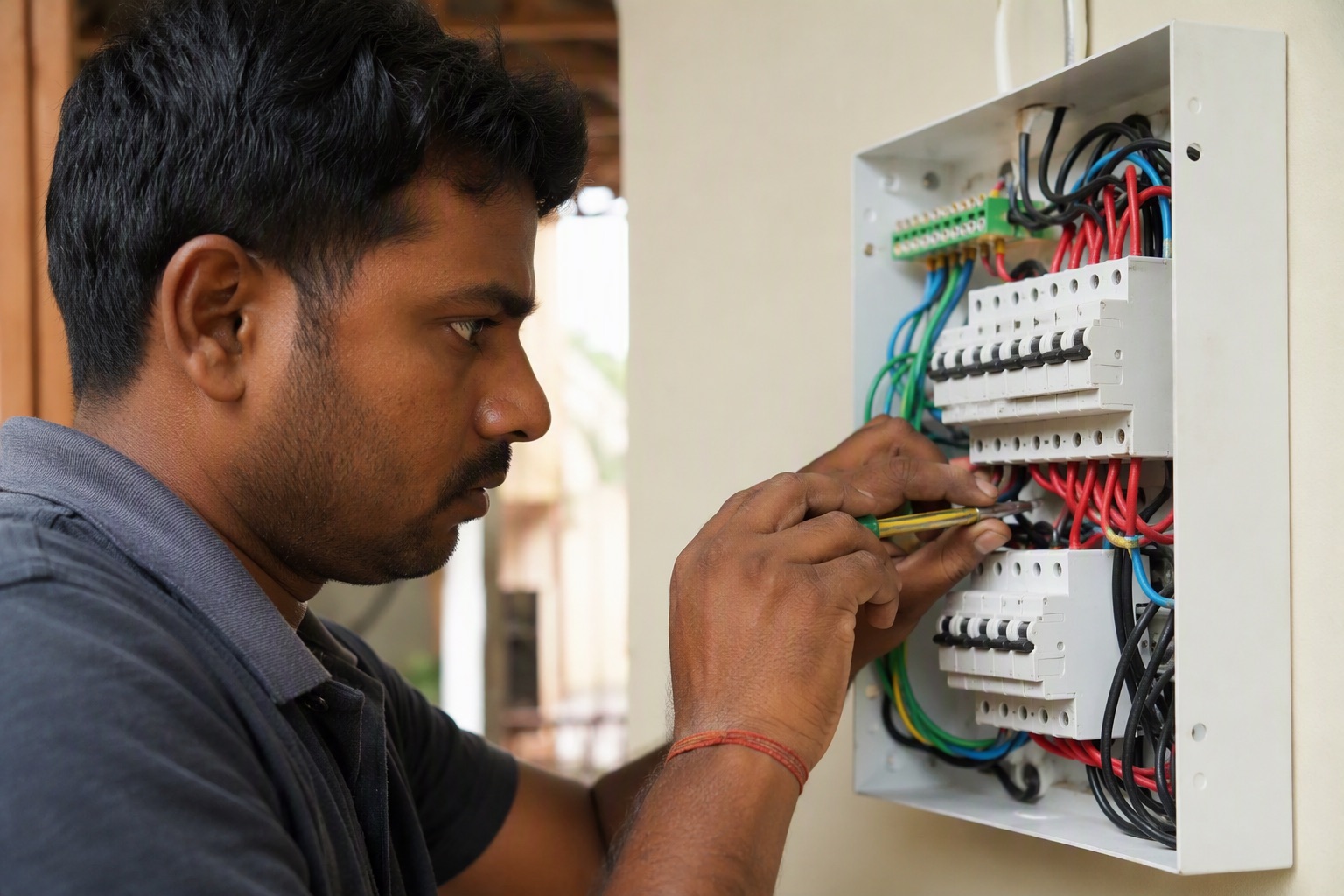
The distribution board is the one component in a house that nobody looks at again for twenty years, which is exactly why it is worth choosing properly the first time.
Sizing: count ways, then add 30%
A "way" is one module position. Count every MCB you need, add the incomer and RCCB (which occupy two modules each), then add roughly 30% spare capacity for future circuits — an added AC, an EV charger, an inverter changeover.
| Home | Typical MCB count | DB size to buy |
|---|---|---|
| 1BHK / small flat | 6–8 | 8-way single door |
| 2BHK | 10–14 | 12-way double door |
| 3BHK | 16–20 | 16-way double door, or 12-way + sub-DB |
| Duplex / independent house | 20–30 | Main DB + one sub-DB per floor |
Approximate DB price bands in Bangalore: 8-way ₹1,200–₹2,800, 12-way ₹1,800–₹4,500, 16-way ₹2,600–₹6,500, depending on brand and whether it is single or double door.
Single door, double door or IP-rated?
- Single door — MCB toggles are exposed when the door is open. Cheapest, fine for a utility area.
- Double door — an inner cover hides the wiring and only the toggles show. Safer with children in the house and much neater. This is the right default for a home.
- IP43 / IP54 enclosures — dust and splash protected, for semi-outdoor locations, utility balconies or borewell points.
What actually differs between a cheap DB and a good one
From the outside they look the same. The differences that matter are inside:
- Busbar quality and current rating. A thin or plated-steel busbar heats up under sustained load. Good boards use properly rated tinned copper.
- Terminal quality on the neutral and earth links — the most common source of loose connections and warm terminals years later.
- Sheet thickness and powder coating, which decides whether the enclosure rusts in a humid utility area.
- DIN rail alignment, which decides whether MCBs from your chosen brand actually sit flush.
The price difference between a poor board and a good one on a 12-way is a couple of thousand rupees, spread across a device that carries the entire house load for two decades. It is not the place to economise.
One DB or several?
For anything larger than a compact 2BHK, split the load. A main DB near the meter with the incomer and RCCB, plus a sub-DB per floor, gives you shorter circuit runs, easier fault isolation and far less disruption when something needs work. In an independent house it also means an electrician does not have to work at the main board with the whole house live.
Keep the same brand for DB and MCBs
Mixing brands inside a board is common and usually works, but module widths, DIN rail heights and busbar comb designs differ slightly between manufacturers. Matching the DB and the breakers avoids gaps, forced fits and comb busbars that do not seat properly. It also keeps warranty responsibility with one manufacturer.
Label the board
Ask your electrician to label every way — kitchen, bedroom 1 lights, AC hall, geyser. It takes ten minutes and saves an hour of guesswork every time something trips for the next twenty years. Photograph the labelled board and keep the picture; it is the most useful electrical document a homeowner can own.
See approximate rates on the switchgear page, and use the load calculator to check your incomer rating.
Send your list on WhatsApp for an exact quote within 60 minutes. Approximate ranges on this page are for planning; WhatsApp 88676 76700 for today's firm rate, with no pressure to buy.
Frequently asked questions
What size distribution board do I need for a 2BHK?
Should I choose a single door or double door distribution board?
What is the difference between a cheap and a good distribution board?
Should the distribution board and MCBs be from the same brand?
Do I need more than one distribution board in a house?
How much does a distribution board cost in Bangalore?
Ready to order for your home?
Upload your wiring list for an instant quote — 100% original material, free next-day delivery across Bangalore.