Flexible Cable and Submersible Pump Cable: Sizes, Types and Prices
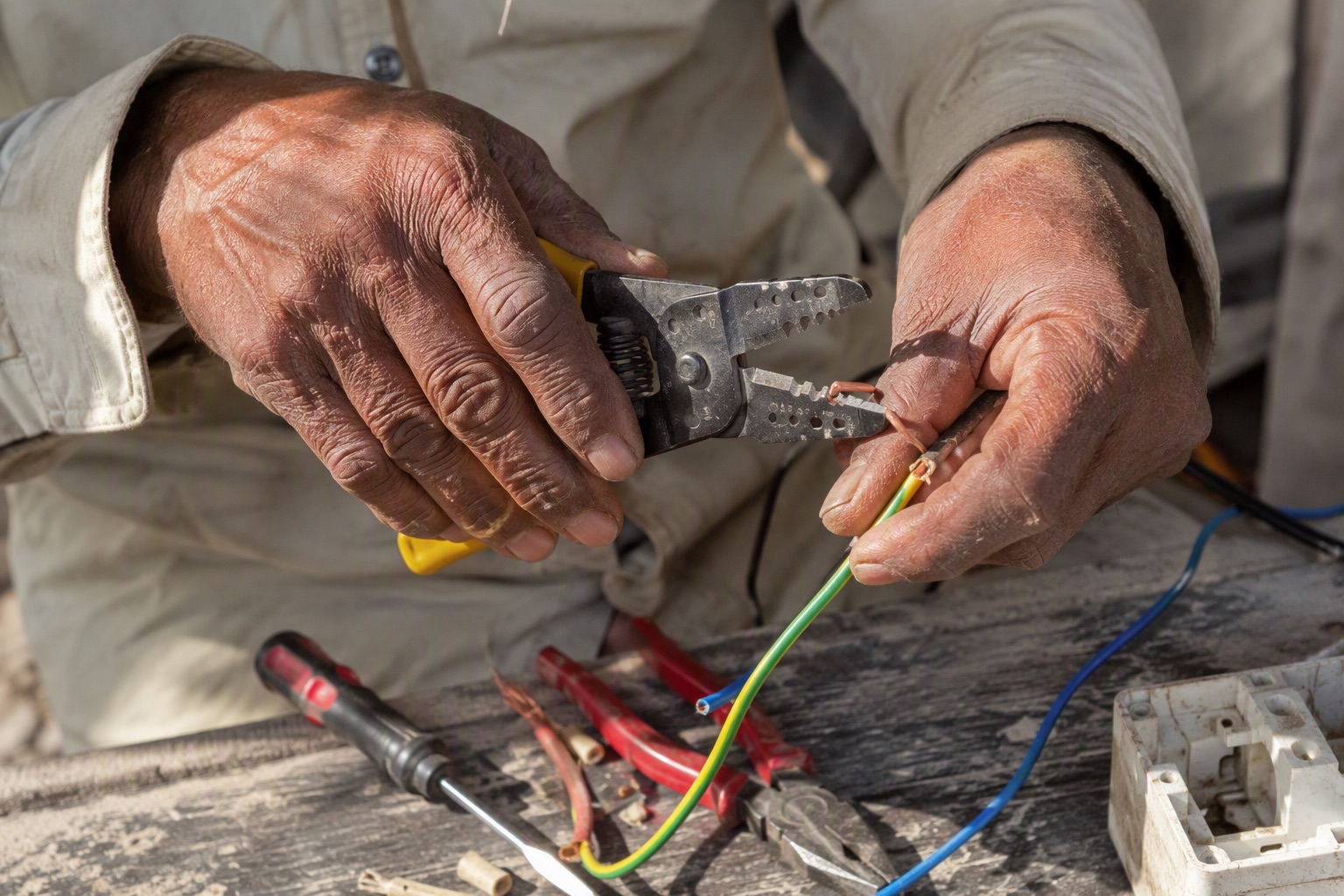
House wire covers the walls; flexible and submersible cable covers everything else — appliances, pumps, motors and outdoor runs. It is a smaller line on the bill and a common place to get the sizing wrong.
Flexible cable versus house wire
House wire is single-core with relatively few strands, built to sit still inside a conduit for decades. Flexible cable has many fine strands and a tough outer sheath, built to bend, move and survive handling. Use flexible cable for appliance leads, pump connections, extension boards, submersible pumps and any run that is not fixed inside a wall.
Core count: what each is for
| Type | Used for |
|---|---|
| 2 core | Single-phase appliances without earthing, lighting circuits in temporary use |
| 3 core | Single-phase with earth — the standard for appliances, single-phase pumps, extensions |
| 4 core | Three-phase equipment — three-phase motors, larger pumps, ACs on three-phase supply |
| 3 core flat | Submersible borewell pumps — the flat profile fits alongside the delivery pipe |
Sizing submersible pump cable
Two things decide the size: motor current and cable length down the borewell. Voltage drop over depth is the factor that catches people out — a cable that is adequate at 100 feet may starve the motor at 400 feet.
| Pump | Up to 150 ft | 150–300 ft | 300–500 ft |
|---|---|---|---|
| 0.5 – 1 HP | 3 core 1.5 sq mm | 3 core 2.5 sq mm | 3 core 4.0 sq mm |
| 1.5 – 2 HP | 3 core 2.5 sq mm | 3 core 4.0 sq mm | 3 core 6.0 sq mm |
| 3 – 5 HP | 3 core 4.0 sq mm | 3 core 6.0 sq mm | 3 core 10.0 sq mm |
Indicative only — confirm against the pump manufacturer's chart for your exact motor rating and depth. Approximate rates run about ₹55–₹95 per metre for 3 core 1.5 sq mm flat, ₹90–₹150 for 2.5 sq mm and ₹140–₹240 for 4.0 sq mm.
What "submersible grade" actually means
A borewell cable sits permanently in water under pressure. Genuine submersible cable uses water-resistant insulation and a sheath rated for continuous immersion, with tight extrusion that does not allow water to travel along the cable. Ordinary flexible cable pushed down a borewell will absorb water within months, fail insulation and, in the worst case, energise the water column. This is one of the few places where using the correct product is not a matter of longevity but of safety.
Practical points
- Never joint a submersible cable inside the borewell unless it is a proper heat-shrink jointing kit, correctly applied. Buy one continuous length.
- Include a separate earth to the pump body and to the borewell casing.
- Use a control panel with dry-run and overload protection — most pump failures are protection failures, not motor failures.
- Buy 10% extra length for the surface run to the panel; a cable that just reaches is a cable under tension.
- Check the copper. Under-weight submersible cable is common and, at depth, produces exactly the voltage drop that burns motors.
Flexible cable for appliances and outdoor use
For appliance leads and extension boards, 3 core 1.0 or 1.5 sq mm covers most needs, with 2.5 sq mm for anything drawing over about 2,000 watts. For outdoor runs to a garden light or gate motor, use sheathed cable in conduit and keep joints inside proper enclosures — outdoor joints in a wall niche are the commonest cause of monsoon earth leakage and RCCB tripping.
See the full range on our wires and cables page.
Send your list on WhatsApp for an exact quote within 60 minutes. Approximate ranges on this page are for planning; WhatsApp 88676 76700 for today's firm rate, with no pressure to buy.
Frequently asked questions
What size cable does a submersible pump need?
What is the difference between flexible cable and house wire?
Can ordinary cable be used in a borewell?
What is the difference between 3 core and 4 core cable?
Why is submersible cable flat instead of round?
How much does submersible pump cable cost?
Ready to order for your home?
Upload your wiring list for an instant quote — 100% original material, free next-day delivery across Bangalore.