LED Lighting for Homes: Types, Lumens, Colour Temperature and Price Bands
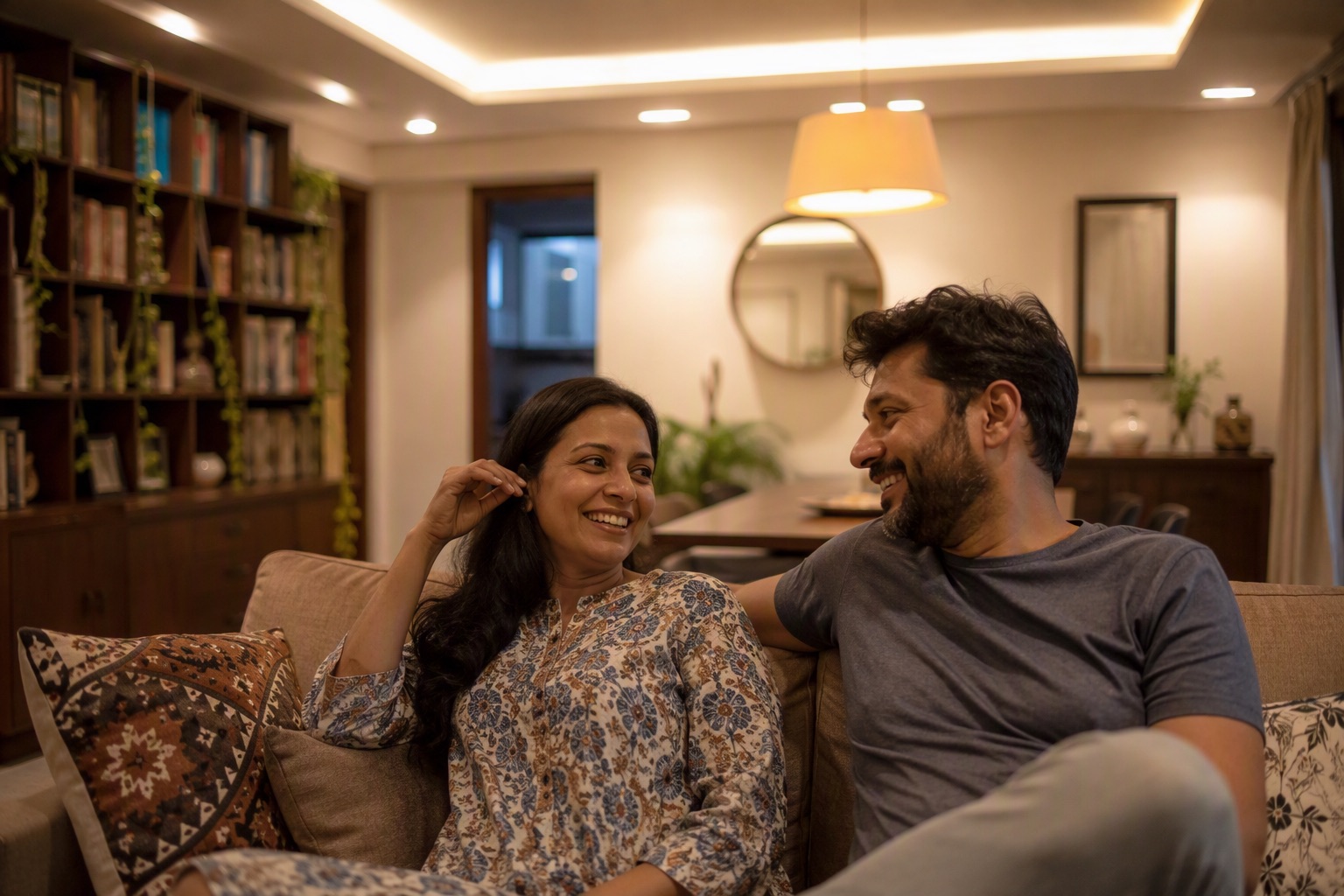
Lighting is bought last and planned first — the conduit and points for a false-ceiling scheme must go in months before anyone chooses a fixture. Here is what to decide, and when.
The five fixture types used in Indian homes
| Type | Approx price | Best for |
|---|---|---|
| LED bulb (B22 / E27) | ₹70 – ₹350 | Existing holders, utility areas, retrofit |
| Surface panel / downlight | ₹250 – ₹1,200 | General ceiling light without false ceiling |
| Recessed panel (false ceiling) | ₹300 – ₹1,600 | Even, glare-free general lighting |
| COB spotlight | ₹400 – ₹2,000 | Focused accent light on walls, art, kitchen counters |
| LED strip / cove (per metre) | ₹90 – ₹450 | Cove lighting, indirect and ambient layers |
How much light each room needs
Lighting is measured in lumens, not watts. A useful rule for Indian homes is lumens per square foot:
- Living room — 20–30 lumens per sq ft general, plus accent layers.
- Bedroom — 15–20 lumens per sq ft, with a lower-level bedside layer.
- Kitchen — 40–60 lumens per sq ft, and under-cabinet light over the counter is worth more than any ceiling fixture.
- Bathroom — 30–40 lumens per sq ft, plus a dedicated mirror light.
- Study or work area — 50–70 lumens per sq ft at the desk.
A modern LED delivers roughly 90–110 lumens per watt, so a 12ft × 12ft bedroom needing about 2,800 lumens is served by roughly 28–32W of good LED.
Colour temperature: get this right or regret it daily
| Temperature | Appearance | Where it belongs |
|---|---|---|
| 2700K – 3000K (warm white) | Yellow, restful | Bedrooms, living room, dining |
| 4000K (neutral) | Balanced | Kitchen, bathroom, corridors |
| 6500K (cool daylight) | Blue-white, clinical | Utility, garage, work areas |
The most common mistake in Indian homes is 6500K everywhere because it looks brighter in the shop. It makes a living room feel like an office. Mix deliberately: warm in living and sleeping areas, neutral where you work.
What separates a good LED from a cheap one
- The driver. Most LED failures are driver failures, not LED failures. A good driver has proper surge protection — which matters in areas with unstable supply.
- Heat sinking. LEDs die from heat. A fixture with a real aluminium heat sink lasts years longer than a plastic-bodied equivalent at the same lumen output.
- CRI (Colour Rendering Index). CRI above 80 makes skin, food and fabric look natural. Cheap fixtures at CRI 65–70 make everything look slightly grey.
- Honest lumen claims. Wattage is easy to print; lumens are easy to overstate. Buy brands that publish both.
- Flicker. Cheap drivers flicker at a rate you do not consciously see but which causes eye strain over hours.
Plan the wiring before the ceiling
Cove and recessed lighting need conduit, driver locations and switching decided before the false ceiling goes up. Decide at that stage how many switch groups you want — a living room on a single switch is a design failure you cannot fix later without opening the ceiling. Three groups (general, cove, accent) is a good default.
Approximate rates are on our lighting page, and the load calculator will tell you what all of it adds up to.
Send your list on WhatsApp for an exact quote within 60 minutes. Approximate ranges on this page are for planning; WhatsApp 88676 76700 for today's firm rate, with no pressure to buy.
Frequently asked questions
How many lumens does a room need?
Which colour temperature is best for a home?
Why do LED lights fail early?
What is CRI and does it matter?
How much does home LED lighting cost in Bangalore?
When should lighting be planned in a house build?
Ready to order for your home?
Upload your wiring list for an instant quote — 100% original material, free next-day delivery across Bangalore.